

Study in Italy Near-Free
Cheaper alternative: Medicine, design, engineering; regional scholarships exist · Fees from ≈ €0 (income-based) · living ≈ $10k/yr
Here is Luxembourg's astonishing equation: the world's richest country per capita — home to the EU's banking core, Amazon's European HQ and the European Court of Justice — runs a public university whose fees for most programmes are only a few hundred euros per semester. The University of Luxembourg teaches in English, French and German (many master's fully in English), the Guillaume Dupaix Scholarship funds outstanding international master's students, public transport is free nationwide, and graduates can stay to seek work in an economy where entry salaries lead Europe. The price is rent: Luxembourg City housing rivals London. Funded honestly, this is Europe's highest-ceiling degree.
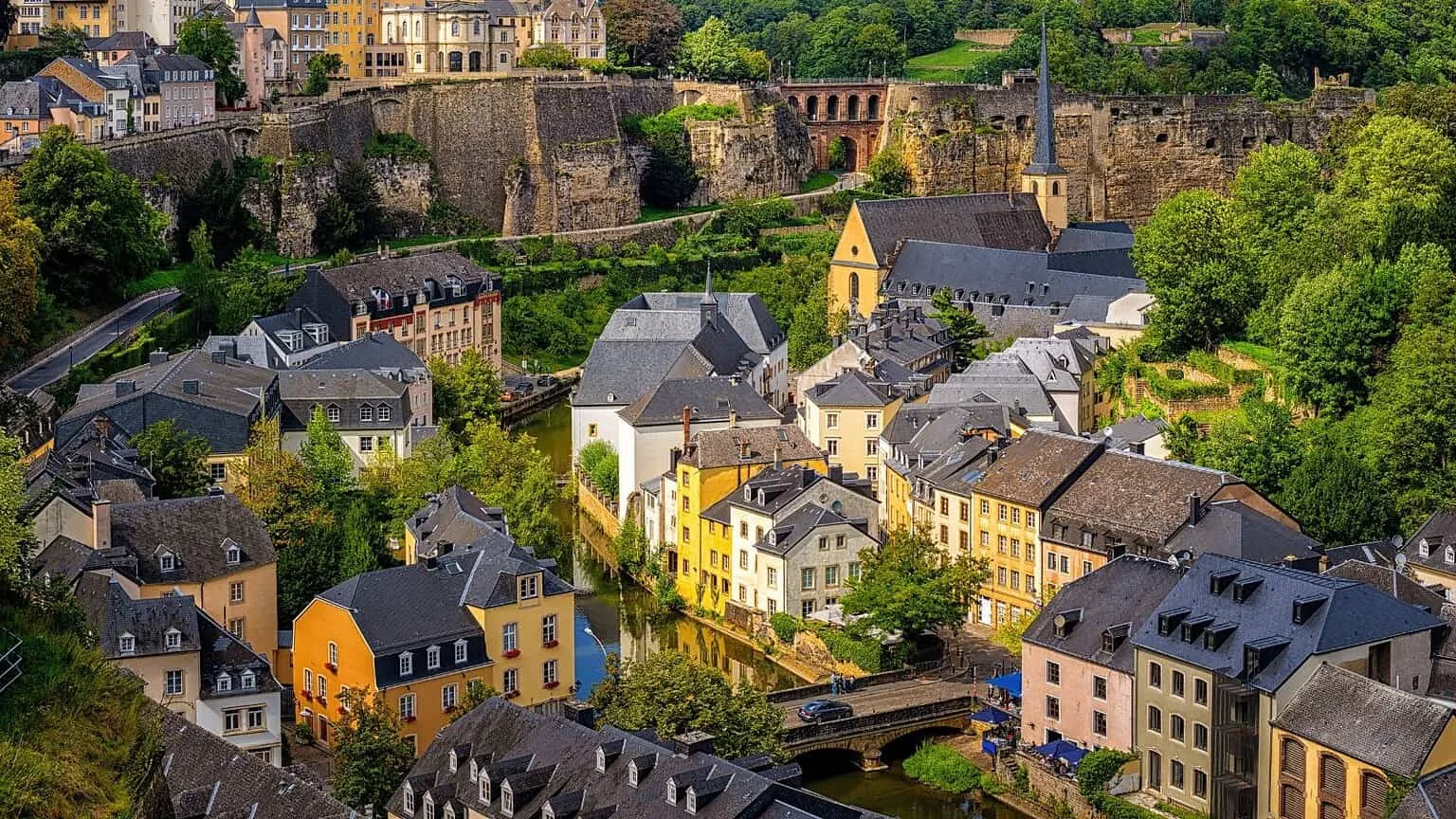
The complete, honest case for Luxembourg — the tiny-fees truth, the rent reality, the finance-job map, and the exact route from Pakistan — in one short narrated briefing.
The Luxembourg video briefing is in production
The narrated 4-minute briefing for Luxembourg lands in this slot very soon. Until then, get the exact same briefing — live, personal, and free — from a counsellor who will map it to your grades and budget.
Luxembourg is the world's second-largest investment-fund centre and the EU's private-banking capital: banks, fund administrators, Big Four firms, Amazon EU, PayPal and EU institutions hire finance, law, data and compliance graduates continuously — at starting salaries that lead the continent. Your classroom neighbours are your future employers.
The University of Luxembourg (founded 2003) was built international: students from 130+ countries, programmes designed across English/French/German, and research muscle in finance, computer science (SnT), materials and Luxembourg law. Small cohorts, modern Belval campus, and fees that belong to another decade.
The Guillaume Dupaix International Master's Scholarship supports outstanding international master's applicants with a stipend paid across the programme (recent terms value it at €5,146 per academic year, plus student housing support arrangements — terms confirmed per call). It exists specifically to bring top non-EU talent to Luxembourg. Competitive, real, and worth building a file for.
Luxembourg made all public transport free — trains, trams, buses, nationwide. France, Germany and Belgium are day trips; many residents live cross-border. Your student budget simply deletes the transport line that bleeds students everywhere else.
Finance, tech and EU institutions work heavily in English — master's programmes in finance, data, law (English tracks) and engineering recruit internationally. French and German then stack advantage upon advantage in the local market; the university teaches both, and multilingual graduates are Luxembourg's favourite hires.
Luxembourg City is one of Europe's most expensive housing markets: a room in shared housing commonly runs €700–1,100+, studios far more. Student residences (applied for the moment admission lands) and cross-border living are the survival strategies. We file only budgets that survive Luxembourg arithmetic — if yours doesn't yet, we'll show you Belgium or Germany routes to the same finance careers.
Finance & BankingWealth ManagementComputer Science & Cybersecurity (SnT)Data ScienceEuropean & Financial LawBusiness & EntrepreneurshipEngineering & MaterialsSpace ResourcesPsychologyLogistics & Supply Chain
| Item | Guide figure | What to know |
|---|---|---|
| University of Luxembourg tuition | ≈ €200–800 / semester | Most bachelor/master programmes cluster at the low end; a few specialised programmes charge more — quoted exactly in your shortlist |
| Private institutions | ≈ €8,000–20,000 / year | Business schools and branch providers — a deliberate premium choice, never our default |
| Living costs | ≈ €1,500–2,100 / month | Rent dominates; student residences and shared flats anchor the low end; transport is €0 |
| Residence funds proof | Tied to the Luxembourg social minimum benchmark (guide) | Shown via sponsor resources to the current ministerial standard — we confirm the exact figure for your filing |
Comparing countries on cost? See how Austria compares — full cost guide or scan every option in the Mid-Range: Maximum Value budget hub.
Beyond the Guillaume Dupaix Scholarship, Luxembourg's stack includes university and faculty awards, Luxembourg's state financial aid system (Aide financière — eligibility for non-residents is limited and checked case-by-case; most international students budget without it), research assistant contracts at master's/PhD level (Luxembourg PhDs are salaried), and Erasmus Mundus full rides. The honest headline remains the base equation: near-zero public fees against Europe's highest graduate salaries — with rent as the one serious enemy, managed by early housing strategy.
Graduates of Luxembourg institutions can typically obtain a residence permit to seek employment or start a business — currently up to 9 months (terms confirmed for your case) — then convert to salaried-worker residence with a qualifying job. In a labour market with structural shortages in finance, IT, health and engineering, conversion rates for multilingual graduates are strong. During studies, students may work part-time within the legal limits (commonly up to 15 hrs/week in term under current rules for third-country students, more in holidays) — at Luxembourg wages, unusually meaningful support.
We model your total Luxembourg cost (rent scenarios included) against realistic graduate salaries in your field — and against Belgium/Germany alternatives — on one honest page.
The Dupaix is decided with admission for top files: transcripts, references and a motivation that argues fit with Luxembourg's industries. Non-EU application windows close early (often by February–April for autumn) — your file is built in winter.
Temporary authorisation to stay and residence permit prepared with resources evidence in the prescribed format; university residence application fired at admission; arrival essentials (registration, bank, CNS health) sequenced.
At the University of Luxembourg, yes — most programmes charge a few hundred euros per semester in enrolment/tuition fees, because the state funds the university as a public good in a wealthy country. The real budget battle is living costs and admission competitiveness, not tuition. Anyone quoting you €20,000 tuition for Uni.lu is quoting a private school.
Luxembourg ties the resources requirement to its social minimum wage benchmark — as a planning guide, evidence consistent with roughly €1,500–2,100 a month of living funds, via sponsor resources with clear history, in the format the authorities currently require. We confirm the exact figure for your filing date.
Many master's programmes teach fully in English; bachelor's programmes are typically bilingual (French/English or German/English) and require evidence in the teaching languages. Your shortlist is filtered to programmes your language profile can genuinely complete — and we plan language-building into the degree either way.
Dupaix awards go to outstanding master's applicants — top grades from a recognised university plus a sharp fit story. We grade your competitiveness in writing in your free session; win or lose, your Uni.lu base fees remain a few hundred euros, which is why Luxembourg stays rational even without the award.
Luxembourg's economy is small in population and enormous in capital: fund assets measured in trillions, EU institutions, and satellite/space and logistics sectors beside finance. Graduates also carry an EU degree into Frankfurt, Paris, Brussels and Amsterdam — all under three hours away, all hiring Luxembourg graduates.
Still weighing it up? Browse the Europe – Schengen region hub or the Mid-Range: Maximum Value budget hub to compare Luxembourg against its closest alternatives.
Four honest alternatives drawn from the Europe – Schengen region hub, the Mid-Range budget tier and the premium step-up shelf — each with the reason it belongs on your shortlist.
Cheaper alternative: Medicine, design, engineering; regional scholarships exist · Fees from ≈ €0 (income-based) · living ≈ $10k/yr
Also in Europe – Schengen: Medicine & aviation; affordable EU · ≈ $11k/yr all-in

Same budget (Mid-Range), different map: GKS scholarships; tech, media, business · ≈ $13k/yr all-in
The aspirational step-up: Asia's top-ranked universities; finance & tech · ≈ $28k/yr all-in